• Future Students

    If you believe that you can win the world with your blogging skills then you can surely be our future student.

    Apply Now
  • Our Community

    We have huge community of blogger who love to change the world with us and help each other succeed.

    Apply Now

  • Best Curriculum

    We are dedicated at providing the well researched and the best in the class curriculum for our students.

    Apply Now

  • Flexible Timing

    With our Flexible timing your thirst for knowledge will not be hampered by your busy schedule.

    Apply Now
  • Blog

    Read More

    1977

    Year Founded

    60

    NCE/Degree Programs

    934

    Certified Teachers

    8,130

    Number of Students

    Best WordPress Theme for your Education Institution

    Display the courses provided by your institution in this section. The view more button can be linked to Course listing Page.
    Buy ButtonView Details

    Best WordPress Theme for your Education Institution

    Display the courses provided by your institution in this section. The view more button can be linked to Course listing Page.

    Intellectually Diverse

    You can add all sorts of information that you want to display to your future students on this page.

    Learn More

    Driven by our Curiosity

    You can add all sorts of information that you want to display to your future students on this page.

    Learn More

    Scholarship Program

    You can add all sorts of information that you want to display to your future students on this page.

    Learn More

    Globally Focused

    You can add all sorts of information that you want to display to your future students on this page.

    Learn More

    Our Students Success Stories

    Below is what our students have to say about us.

    Gallery

    Mr Solomon Gambo, the amiable College Bursar, during the 2025/2026 Session Matriculation Ceremony
    Engr. Nyalla Simon Gajere, MCPN, The Pioneer Director of ICT of Kaduna State College of Education Gidan Waya, and the current driver of Information Technology of the College. A Certified and Registered Computer Professional, with the Computer Professional Registration Council of Nigeria, and also a Certified and Registered Electrical/Computer Engineer, with the Council for the Regulation of Engineering in Nigeria (COREN).
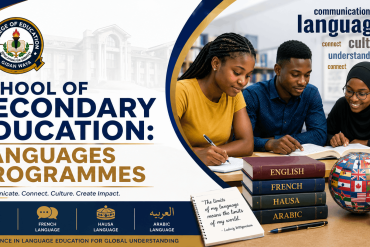
    Dr. Haddy Yashim, the Dean of School of Secondary Education, Language Programme, Addressing the new Students during the 2025/2026 Session Matriculation Ceremony.
    Mr Elisha Bisalla, MIAAP, FCISM, the amiable College Registrar, Addressing the new Students during the 2025/2026 Session Matriculation Ceremony.
    Dr. Jummai Grace Tabat, the articulate Deputy Provost (Administration) of the College, Addressing the new Students during the 2025/2026 Session Matriculation Ceremony.
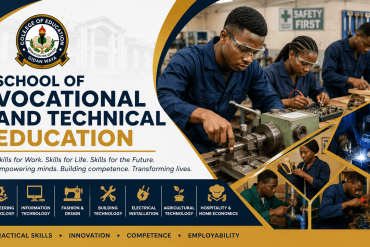
    Dr. Doshiya Barwa, the Dean of School of Secondary Education, Vocational and Technical Education, Addressing the new Students during the 2025/2026 Session Matriculation Ceremony.
    Mr Linus Pitto, the Dean of School of Secondary Education, Science Programme, Addressing the new Students during the 2025/2026 Session Matriculation Ceremony.
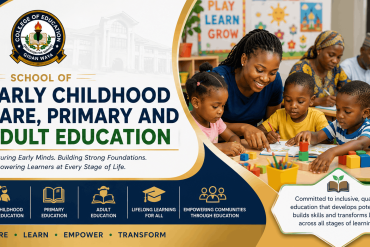
    Mrs Susan James, the Dean of School of ECCE/PES/ANFE/SNE, Addressing the new Students during the 2025/2026 Session Matriculation Ceremony.
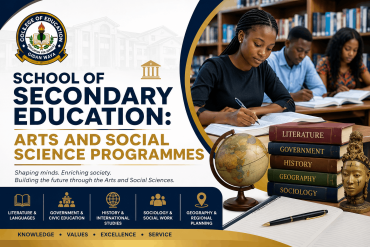
    Mr Irimiya Nabibi, the Dean of School of Secondary Education, Arts & Social Science Programme, Addressing the new Students during the 2025/2026 Session Matriculation Ceremony.
    Barr. Joseph Bulus Yawuck, the Academic Secretary of the College, Addressing the new Students during the 2025/2026 Session Matriculation Ceremony.
    Mr Danladi Mark Aduwu, MNIPR, the College Public Relations Officer, the Programme Anchor of the 2025/2026 Session Matriculation Ceremony.
    A cross section of Management Staff during the 2025/2026 Session Matriculation Ceremony.
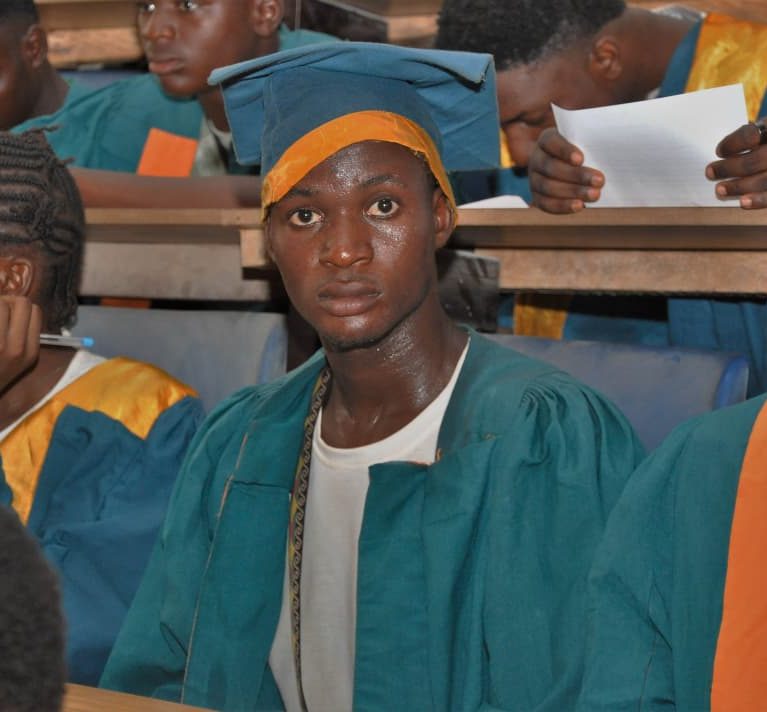
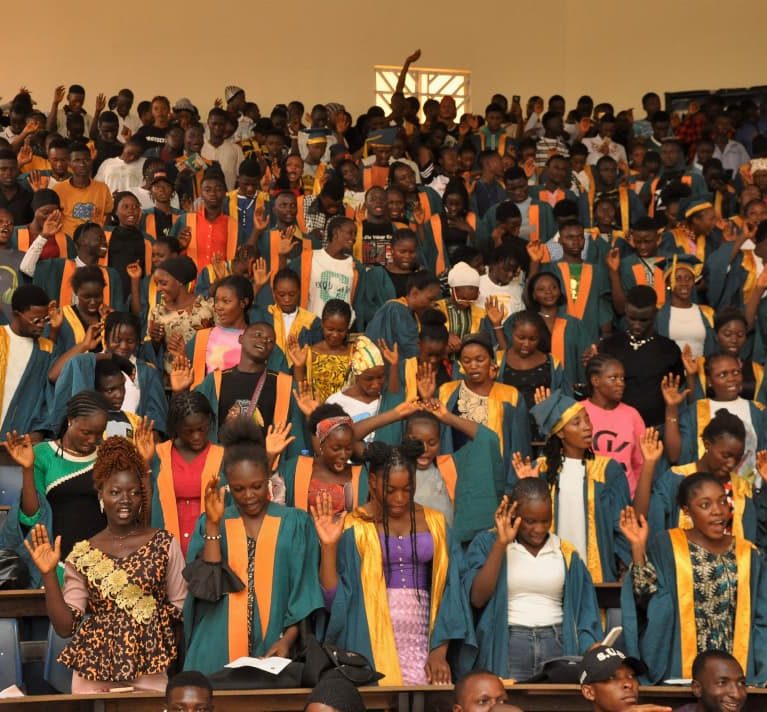
    A cross section of the Matriculated Students, 2025/2026 Academic Session.
    A cross section of the Matriculated Students, 2025/2026 Academic Session.2
    A cross section of the Matriculated Students, 2025/2026 Academic Session.3

    Computer Science Beginner Class

    Formal education occurs in a structured environment whose explicit purpose is teaching students. Usually, formal education takes place in a school environment with classrooms of multiple students learning together with a trained, certified teacher of the sEducation is the process of facilitating learning, or the acquisition of knowledge, skills, values, beliefs, and habits. Educational methods include storytelling, discussion, teaching, training, and directed research. Education frequently takes place under the guidance of educators and also learners may also educate themselves. Education can take place in formal or informal settings and any experience that has a formative effect on the way one thinks, feels, or acts may be considered educational. The methodology of teaching is called pedagogy. Formal education is commonly divided formally into such stages as preschool or kindergarten, primary school, secondary school and then college, university, or apprenticeship. A right to education has been recognized by some governments and the United Nations. In most regions, education is compulsory up to a certain age.ubject. Education began in prehistory, as adults trained the young in the knowledge and skills deemed necessary in their society. In pre-literate societies, this was achieved orally and through imitation. Story-telling passed knowledge, values, and skills from one generation to the next. As cultures began to extend their knowledge beyond skills that could be readily learned through imitation, formal education developed. Schools existed in Egypt at the time of the Middle Kingdom. Matteo Ricci (left) and Xu Guangqi (right) in the Chinese edition of Euclid's Elements published in 1607 Plato founded the Academy in Athens, the first institution of higher learning in Europe.The city of Alexandria in Egypt, established in 330 BCE, became the successor to Athens as the intellectual cradle of Ancient Greece. There, the great Library of Alexandria was built in the 3rd century BCE. European civilizations suffered a collapse of literacy and organization following the fall of Rome in CE 476. In China, Confucius (551–479 BCE), of the State of Lu, was the country's most influential ancient philosopher, whose educational outlook continues to influence the societies of China and neighbours like Korea, Japan, and Vietnam. Confucius gathered disciples and searched in vain for a ruler who would adopt his ideals for good governance, but his Analects were written down by followers and have continued to influence education in East Asia into the modern era.

    Beginner Study English Language

    Formal education occurs in a structured environment whose explicit purpose is teaching students. Usually, formal education takes place in a school environment with classrooms of multiple students learning together with a trained, certified teacher of the sEducation is the process of facilitating learning, or the acquisition of knowledge, skills, values, beliefs, and habits. Educational methods include storytelling, discussion, teaching, training, and directed research. Education frequently takes place under the guidance of educators and also learners may also educate themselves. Education can take place in formal or informal settings and any experience that has a formative effect on the way one thinks, feels, or acts may be considered educational. The methodology of teaching is called pedagogy. Formal education is commonly divided formally into such stages as preschool or kindergarten, primary school, secondary school and then college, university, or apprenticeship. A right to education has been recognized by some governments and the United Nations. In most regions, education is compulsory up to a certain age.ubject. Education began in prehistory, as adults trained the young in the knowledge and skills deemed necessary in their society. In pre-literate societies, this was achieved orally and through imitation. Story-telling passed knowledge, values, and skills from one generation to the next. As cultures began to extend their knowledge beyond skills that could be readily learned through imitation, formal education developed. Schools existed in Egypt at the time of the Middle Kingdom. Matteo Ricci (left) and Xu Guangqi (right) in the Chinese edition of Euclid's Elements published in 1607 Plato founded the Academy in Athens, the first institution of higher learning in Europe.The city of Alexandria in Egypt, established in 330 BCE, became the successor to Athens as the intellectual cradle of Ancient Greece. There, the great Library of Alexandria was built in the 3rd century BCE. European civilizations suffered a collapse of literacy and organization following the fall of Rome in CE 476. In China, Confucius (551–479 BCE), of the State of Lu, was the country's most influential ancient philosopher, whose educational outlook continues to influence the societies of China and neighbours like Korea, Japan, and Vietnam. Confucius gathered disciples and searched in vain for a ruler who would adopt his ideals for good governance, but his Analects were written down by followers and have continued to influence education in East Asia into the modern era.

    Marketing in a Digital World

    Formal education occurs in a structured environment whose explicit purpose is teaching students. Usually, formal education takes place in a school environment with classrooms of multiple students learning together with a trained, certified teacher of the sEducation is the process of facilitating learning, or the acquisition of knowledge, skills, values, beliefs, and habits. Educational methods include storytelling, discussion, teaching, training, and directed research. Education frequently takes place under the guidance of educators and also learners may also educate themselves. Education can take place in formal or informal settings and any experience that has a formative effect on the way one thinks, feels, or acts may be considered educational. The methodology of teaching is called pedagogy. Formal education is commonly divided formally into such stages as preschool or kindergarten, primary school, secondary school and then college, university, or apprenticeship. A right to education has been recognized by some governments and the United Nations. In most regions, education is compulsory up to a certain age.ubject. Education began in prehistory, as adults trained the young in the knowledge and skills deemed necessary in their society. In pre-literate societies, this was achieved orally and through imitation. Story-telling passed knowledge, values, and skills from one generation to the next. As cultures began to extend their knowledge beyond skills that could be readily learned through imitation, formal education developed. Schools existed in Egypt at the time of the Middle Kingdom. Matteo Ricci (left) and Xu Guangqi (right) in the Chinese edition of Euclid's Elements published in 1607 Plato founded the Academy in Athens, the first institution of higher learning in Europe.The city of Alexandria in Egypt, established in 330 BCE, became the successor to Athens as the intellectual cradle of Ancient Greece. There, the great Library of Alexandria was built in the 3rd century BCE. European civilizations suffered a collapse of literacy and organization following the fall of Rome in CE 476. In China, Confucius (551–479 BCE), of the State of Lu, was the country's most influential ancient philosopher, whose educational outlook continues to influence the societies of China and neighbours like Korea, Japan, and Vietnam. Confucius gathered disciples and searched in vain for a ruler who would adopt his ideals for good governance, but his Analects were written down by followers and have continued to influence education in East Asia into the modern era.

    MBA Business Management

    Formal education occurs in a structured environment whose explicit purpose is teaching students. Usually, formal education takes place in a school environment with classrooms of multiple students learning together with a trained, certified teacher of the sEducation is the process of facilitating learning, or the acquisition of knowledge, skills, values, beliefs, and habits. Educational methods include storytelling, discussion, teaching, training, and directed research. Education frequently takes place under the guidance of educators and also learners may also educate themselves. Education can take place in formal or informal settings and any experience that has a formative effect on the way one thinks, feels, or acts may be considered educational. The methodology of teaching is called pedagogy. Formal education is commonly divided formally into such stages as preschool or kindergarten, primary school, secondary school and then college, university, or apprenticeship. A right to education has been recognized by some governments and the United Nations. In most regions, education is compulsory up to a certain age.ubject. Education began in prehistory, as adults trained the young in the knowledge and skills deemed necessary in their society. In pre-literate societies, this was achieved orally and through imitation. Story-telling passed knowledge, values, and skills from one generation to the next. As cultures began to extend their knowledge beyond skills that could be readily learned through imitation, formal education developed. Schools existed in Egypt at the time of the Middle Kingdom. Matteo Ricci (left) and Xu Guangqi (right) in the Chinese edition of Euclid's Elements published in 1607 Plato founded the Academy in Athens, the first institution of higher learning in Europe.The city of Alexandria in Egypt, established in 330 BCE, became the successor to Athens as the intellectual cradle of Ancient Greece. There, the great Library of Alexandria was built in the 3rd century BCE. European civilizations suffered a collapse of literacy and organization following the fall of Rome in CE 476. In China, Confucius (551–479 BCE), of the State of Lu, was the country's most influential ancient philosopher, whose educational outlook continues to influence the societies of China and neighbours like Korea, Japan, and Vietnam. Confucius gathered disciples and searched in vain for a ruler who would adopt his ideals for good governance, but his Analects were written down by followers and have continued to influence education in East Asia into the modern era.

    Master of Business Adminstration (CMI)

    Formal education occurs in a structured environment whose explicit purpose is teaching students. Usually, formal education takes place in a school environment with classrooms of multiple students learning together with a trained, certified teacher of the sEducation is the process of facilitating learning, or the acquisition of knowledge, skills, values, beliefs, and habits. Educational methods include storytelling, discussion, teaching, training, and directed research. Education frequently takes place under the guidance of educators and also learners may also educate themselves. Education can take place in formal or informal settings and any experience that has a formative effect on the way one thinks, feels, or acts may be considered educational. The methodology of teaching is called pedagogy. Formal education is commonly divided formally into such stages as preschool or kindergarten, primary school, secondary school and then college, university, or apprenticeship. A right to education has been recognized by some governments and the United Nations. In most regions, education is compulsory up to a certain age.ubject. Education began in prehistory, as adults trained the young in the knowledge and skills deemed necessary in their society. In pre-literate societies, this was achieved orally and through imitation. Story-telling passed knowledge, values, and skills from one generation to the next. As cultures began to extend their knowledge beyond skills that could be readily learned through imitation, formal education developed. Schools existed in Egypt at the time of the Middle Kingdom. Matteo Ricci (left) and Xu Guangqi (right) in the Chinese edition of Euclid's Elements published in 1607 Plato founded the Academy in Athens, the first institution of higher learning in Europe.The city of Alexandria in Egypt, established in 330 BCE, became the successor to Athens as the intellectual cradle of Ancient Greece. There, the great Library of Alexandria was built in the 3rd century BCE. European civilizations suffered a collapse of literacy and organization following the fall of Rome in CE 476. In China, Confucius (551–479 BCE), of the State of Lu, was the country's most influential ancient philosopher, whose educational outlook continues to influence the societies of China and neighbours like Korea, Japan, and Vietnam. Confucius gathered disciples and searched in vain for a ruler who would adopt his ideals for good governance, but his Analects were written down by followers and have continued to influence education in East Asia into the modern era.

    Boxing Ring is rigged says Tagerine

    Sport or sports are all forms of usually competitive physical activity or games which, through casual or organised participation, aim to use, maintain or improve physical ability and skills while providing enjoyment to participants, and in some cases, entertainment for spectators. Usually the contest or game is between two sides, each attempting to exceed the other. Some sports allow a tie game; others provide tie-breaking methods, to ensure one winner and one loser. A number of such two-sided contests may be arranged in a tournament producing a champion. Many sports leagues make an annual champion by arranging games in a regular sports season, followed in some cases by playoffs. Hundreds of sports exist, from those between single contestants, through to those with hundreds of simultaneous participants, either in teams or competing as individuals. In certain sports such as racing, many contestants may compete, each against all with one winner. Records of performance are often kept, and for popular sports, this information may be widely announced or reported in sport news. Sport is also a major source of entertainment for non-participants, with spectator sport drawing large crowds to sport venues, and reaching wider audiences through broadcasting. Sports betting is in some cases severely regulated, and in some cases is central to the sport. According to A.T. Kearney, a consultancy, the global sporting industry is worth up to $620 billion as of 2013. The world's most accessible and practised sport is running, while association football is its most popular spectator sport.

    Gallery

    Our Gallery

    Highly Respected Degree

    Sport or sports are all forms of usually competitive physical activity or games which, through casual or organised participation, aim to use, maintain or improve physical ability and skills while providing enjoyment to participants, and in some cases, entertainment for spectators. Usually the contest or game is between two sides, each attempting to exceed the other. Some sports allow a tie game; others provide tie-breaking methods, to ensure one winner and one loser. A number of such two-sided contests may be arranged in a tournament producing a champion. Many sports leagues make an annual champion by arranging games in a regular sports season, followed in some cases by playoffs. Hundreds of sports exist, from those between single contestants, through to those with hundreds of simultaneous participants, either in teams or competing as individuals. In certain sports such as racing, many contestants may compete, each against all with one winner. Records of performance are often kept, and for popular sports, this information may be widely announced or reported in sport news. Sport is also a major source of entertainment for non-participants, with spectator sport drawing large crowds to sport venues, and reaching wider audiences through broadcasting. Sports betting is in some cases severely regulated, and in some cases is central to the sport. According to A.T. Kearney, a consultancy, the global sporting industry is worth up to $620 billion as of 2013. The world's most accessible and practised sport is running, while association football is its most popular spectator sport.

    Global Education

    Sport or sports are all forms of usually competitive physical activity or games which, through casual or organised participation, aim to use, maintain or improve physical ability and skills while providing enjoyment to participants, and in some cases, entertainment for spectators. Usually the contest or game is between two sides, each attempting to exceed the other. Some sports allow a tie game; others provide tie-breaking methods, to ensure one winner and one loser. A number of such two-sided contests may be arranged in a tournament producing a champion. Many sports leagues make an annual champion by arranging games in a regular sports season, followed in some cases by playoffs. Hundreds of sports exist, from those between single contestants, through to those with hundreds of simultaneous participants, either in teams or competing as individuals. In certain sports such as racing, many contestants may compete, each against all with one winner. Records of performance are often kept, and for popular sports, this information may be widely announced or reported in sport news. Sport is also a major source of entertainment for non-participants, with spectator sport drawing large crowds to sport venues, and reaching wider audiences through broadcasting. Sports betting is in some cases severely regulated, and in some cases is central to the sport. According to A.T. Kearney, a consultancy, the global sporting industry is worth up to $620 billion as of 2013. The world's most accessible and practised sport is running, while association football is its most popular spectator sport.
    View All Blog